
| Periodical: | |
|
|
|
From Pat Deveney's database:
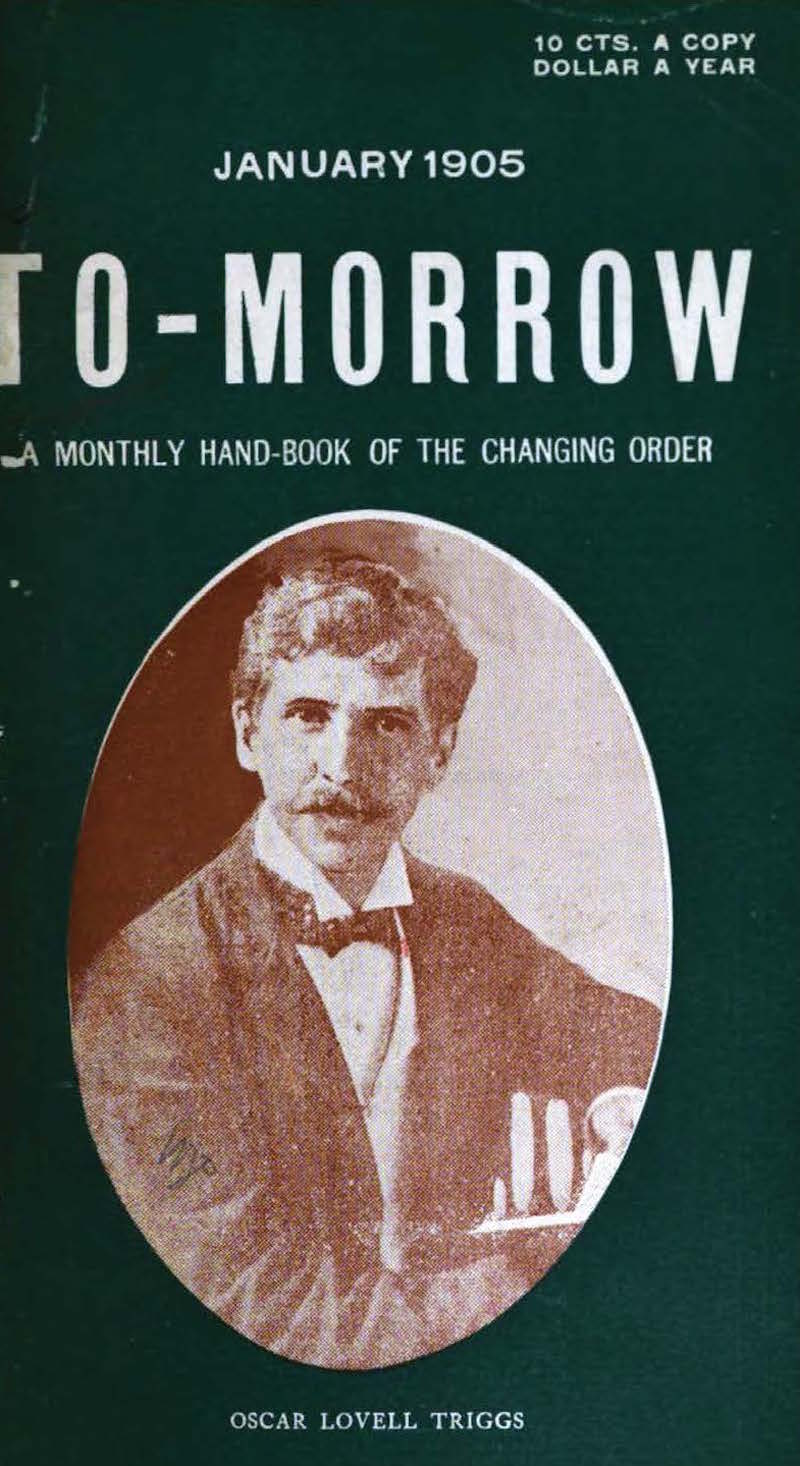
To-morrow. This was one more of the radical reform journals of the period that "fearlessly exposed" current ills and endlessly expounded remedies therefor, all the while having an occasional good word to say about spiritualism (including in this case Lois Waisbrooker) and New Thought. Parker Holmes Sercombe (1860-1944) was born poor in Milwaukee and worked his way as a newsboy and editor and then invented the Parker Sercombe Racing Bicycle, which made his fortune. When the bicycle fad faded he headed to Mexico and founded the dubious but successful American Surety Bank and then returned to Chicago where with Oscar Lovell Triggs he founded the Spencer-Whitman Center, named after Herbert Spencer and Walt Whitman, which came to house this journal's offices and which in 1906 and 1907 played a leading role in the police investigation of the pair's free love colony and then in Triggs' sensational divorce, which centered on the intimate activities of the colony's devotees. The journal also featured a poem by Whitman and published the poems of Carl Sandburg, who traded poems and his editorial work for room and board at the Spencer-Whitman Center. He described Sercombe as a "foggy philosophical anarchist." He was that. After the dissolution of his free-love colony, Sercombe survived as a lecturer and universal expert, gas station operator in Mexico, and then salesman in Los Angeles. As was to be expected in a commercial age, the journal also promoted its own "To-Morrow Health Home," which promised to "check debaucheries that 'preaching' and praying have never touched," and "To-Morrow School of Clear Thinking," and carried the advertisements of dozens of fringe New-Thought and radical schemes and institutes to gain wealth and success. Advertised in The Mountain Pine and in The Swastika, 1907-1908.
|
|
| University of Chicago. | |
| To-Morrow V1 1905 | |
| To-Morrow V2 1906 | |
| To-Morrow V3 1907 | |
| To-Morrow V4 1908 |
|
|